


The Front Range got a welcome surprise overnight as a steady rain event delivered more moisture than many locations were expecting. While today’s clouds, fog, and cool temperatures will keep autumn firmly in charge, they’re also the beginning of a much quieter stretch of weather ahead. Mother Nature will flip the script again with sunshine and temperatures climbing well above normal the rest of the week but don’t get too comfortable. Forecast models are already hinting at our next potential storm opportunity just beyond Halloween.
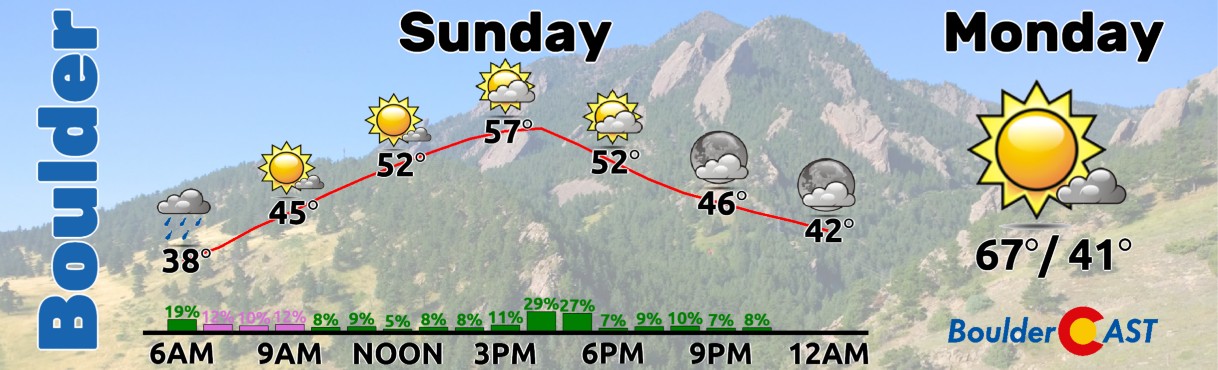
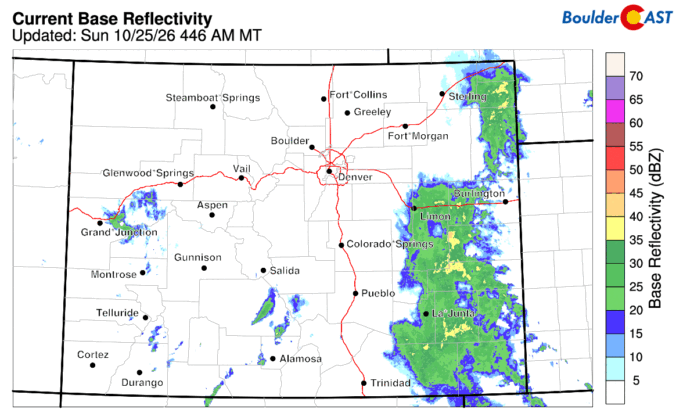
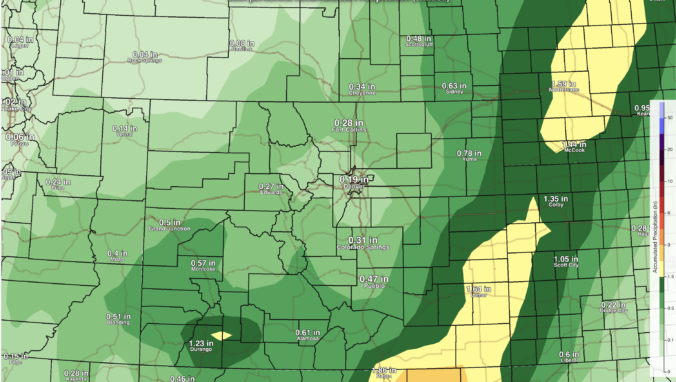
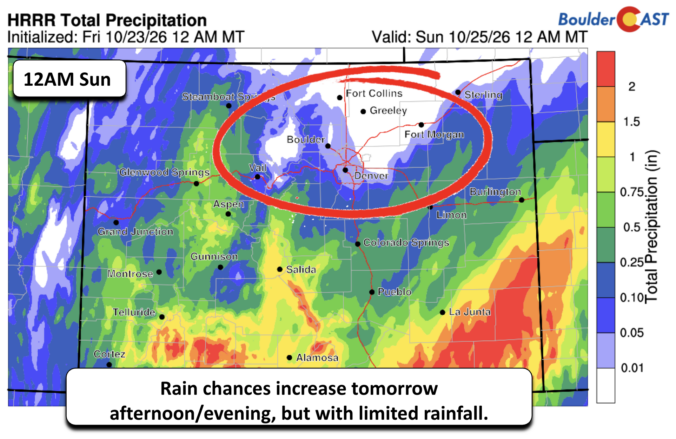
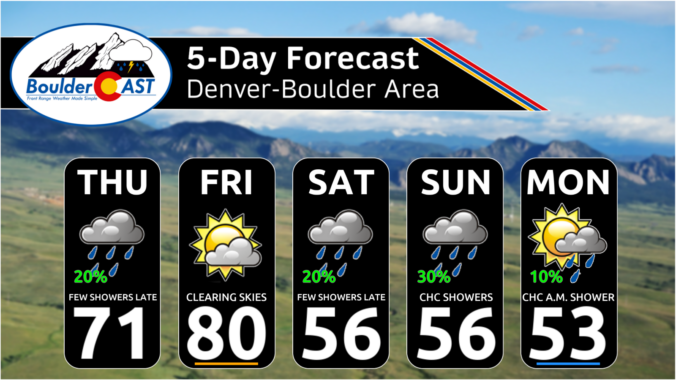
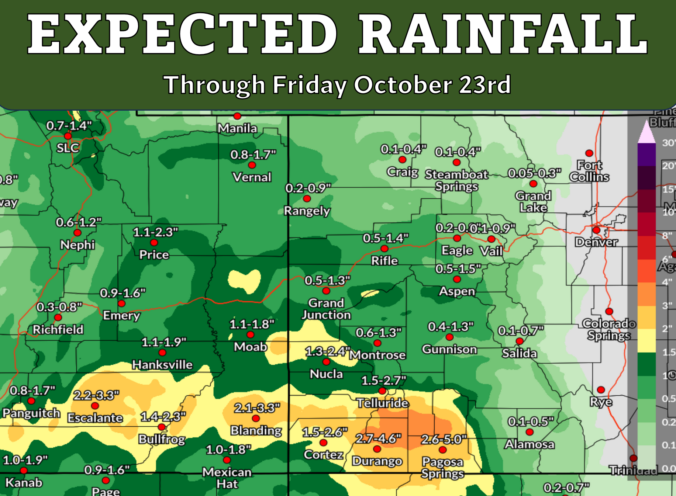
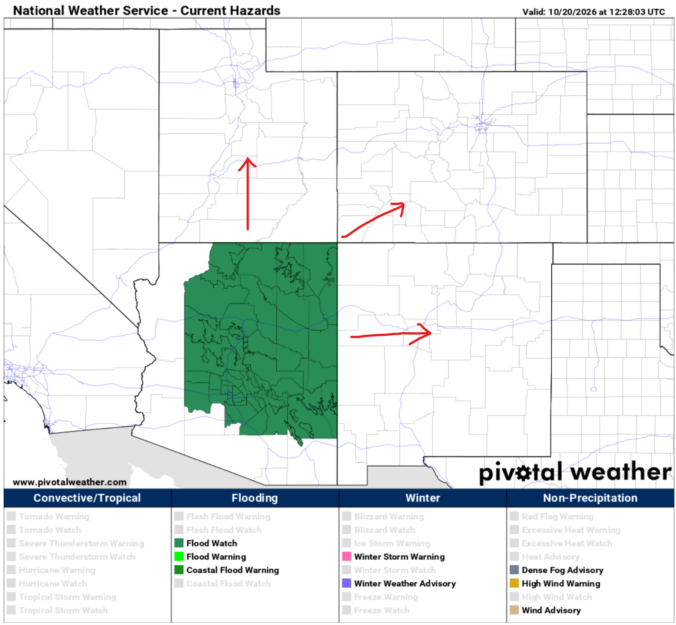
Last week’s storm finally delivered the kind of soaking rain we’ve been waiting months to see, but don’t get used to it. The atmosphere is shifting back into a familiar pattern this week, with summer-like warmth, abundant sunshine, and another surge of tropical moisture headed toward the Southwest. The catch? Most of that moisture will never make it to the Front Range. In this week’s update, we look at the drought-improving impacts of last week’s storm, why the San Juans are poised to cash in yet again, and whether a late-week cold front can squeeze out a little bit of rain for us before temperatures finally start feeling a bit more like October.
Continue reading

Current Conditions
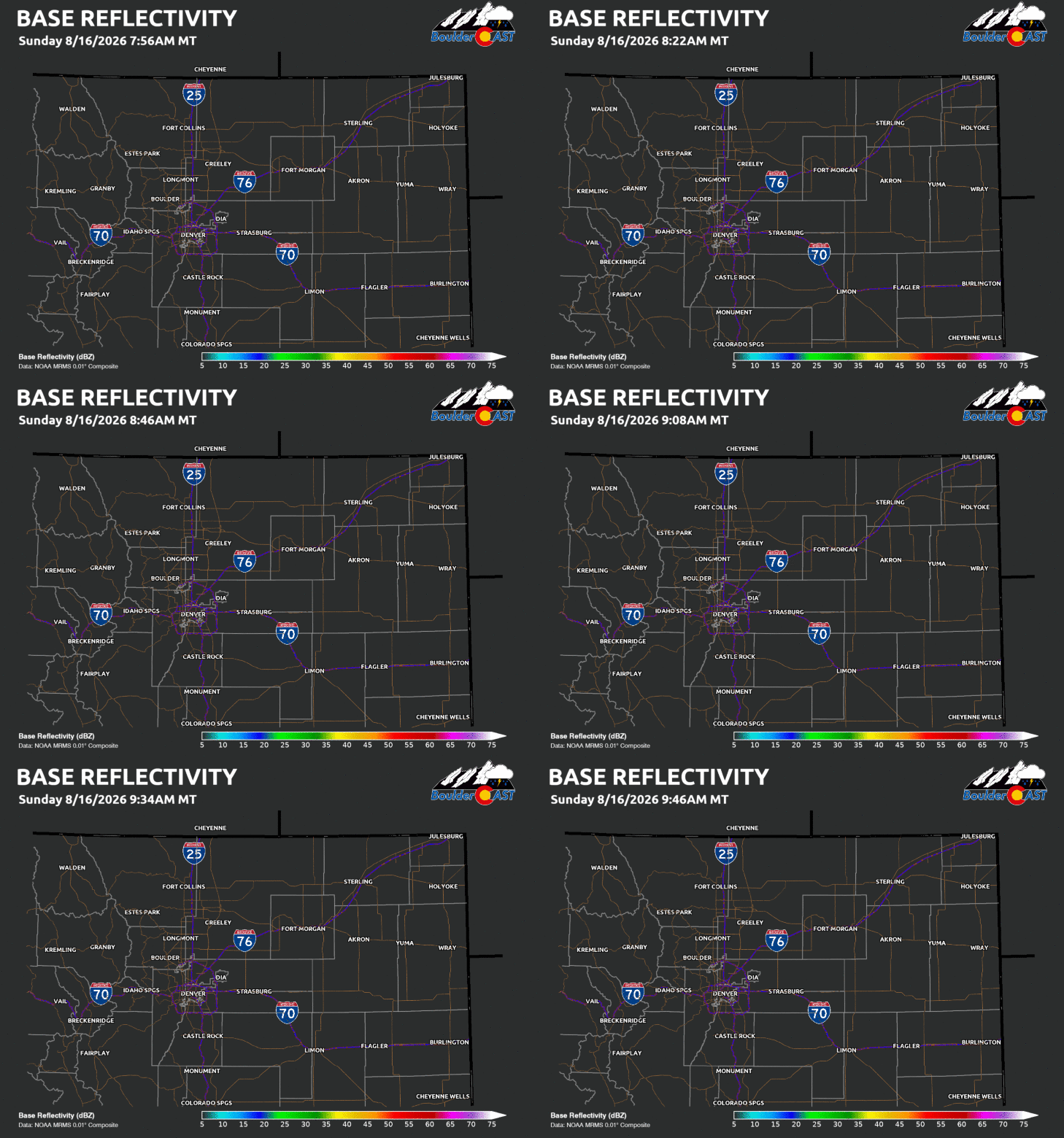
Live Radar
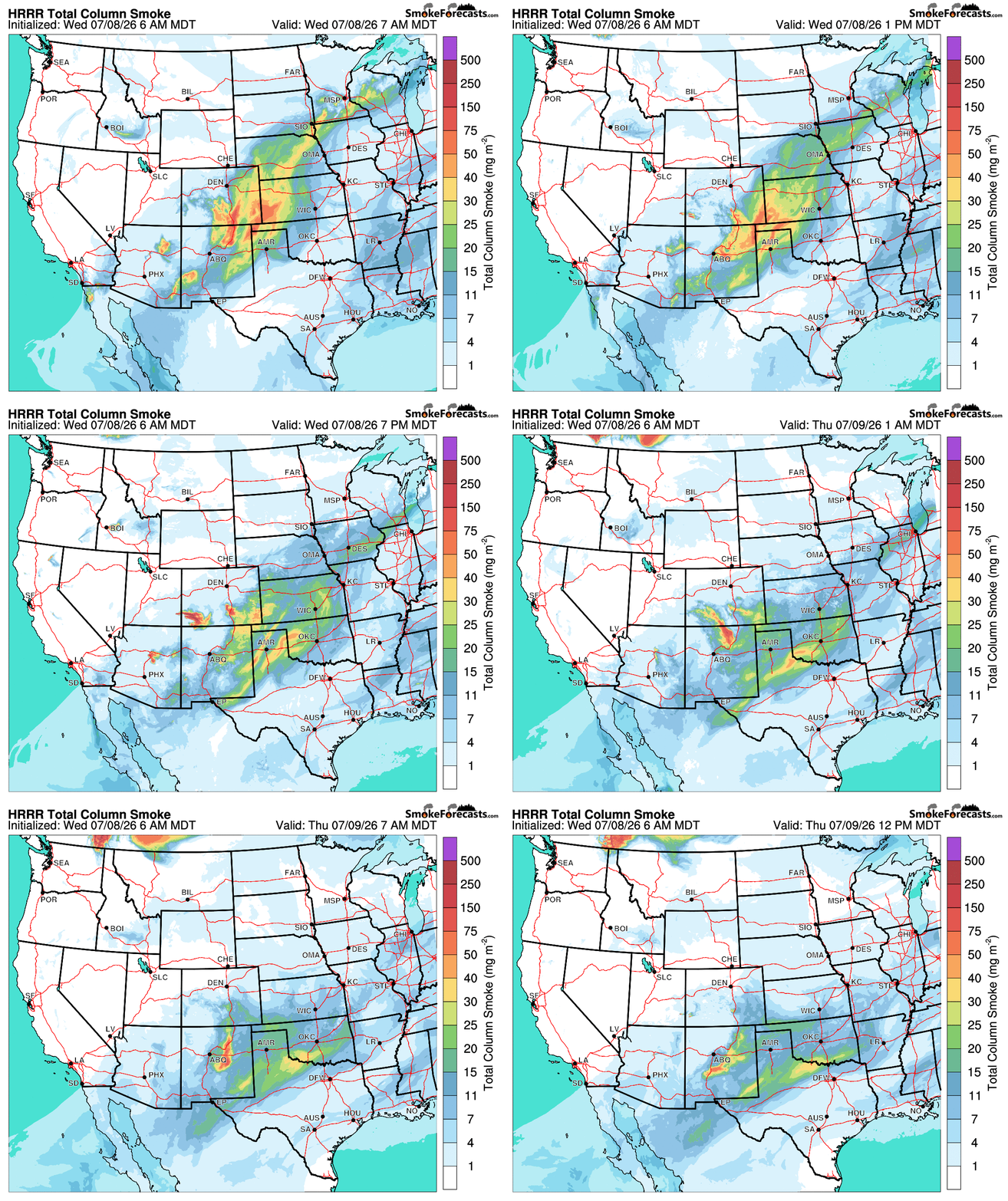
Latest Smoke Forecast
Recent Premium Posts

BoulderCAST Daily – Sun 10/25/26 | Some Wet Weather Tonight Into Monday But limited Wetting Rain
🌬️ Chilly and unsettled through Monday — An area of low pressure brings …
BoulderCAST Daily – Sat 10/24/26 | Chilly and Damp Through Monday
🌬️ Chilly, Unsettled Weekend — An area of low pressure brings pockets of …
BoulderCAST Daily – Fri 10/23/26 | Another Warm Day Before Unsettled Weather Kicks In
☀️ Warm to End The Week — Highs top out near 80 this …
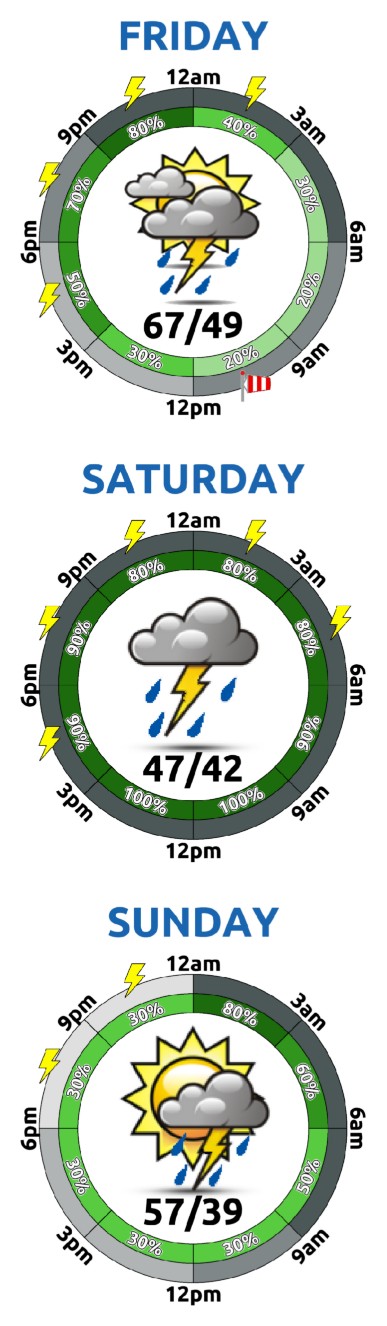
3-Day Forecast
Trending Content


© 2026 Front Range Weather, LLC